
A Memory Jar That Became My Favorite Birthday Gift
91 views
Birthdays have a funny way of collecting things you don't really need.
Another mug. Another scented candle. Another gift card that ends up forgotten in a drawer.
I've smiled politely through plenty of those moments. Most of us have. Yet one birthday completely changed how I think about meaningful gifts, and surprisingly, it didn't come wrapped in expensive paper or arrive in a huge box.
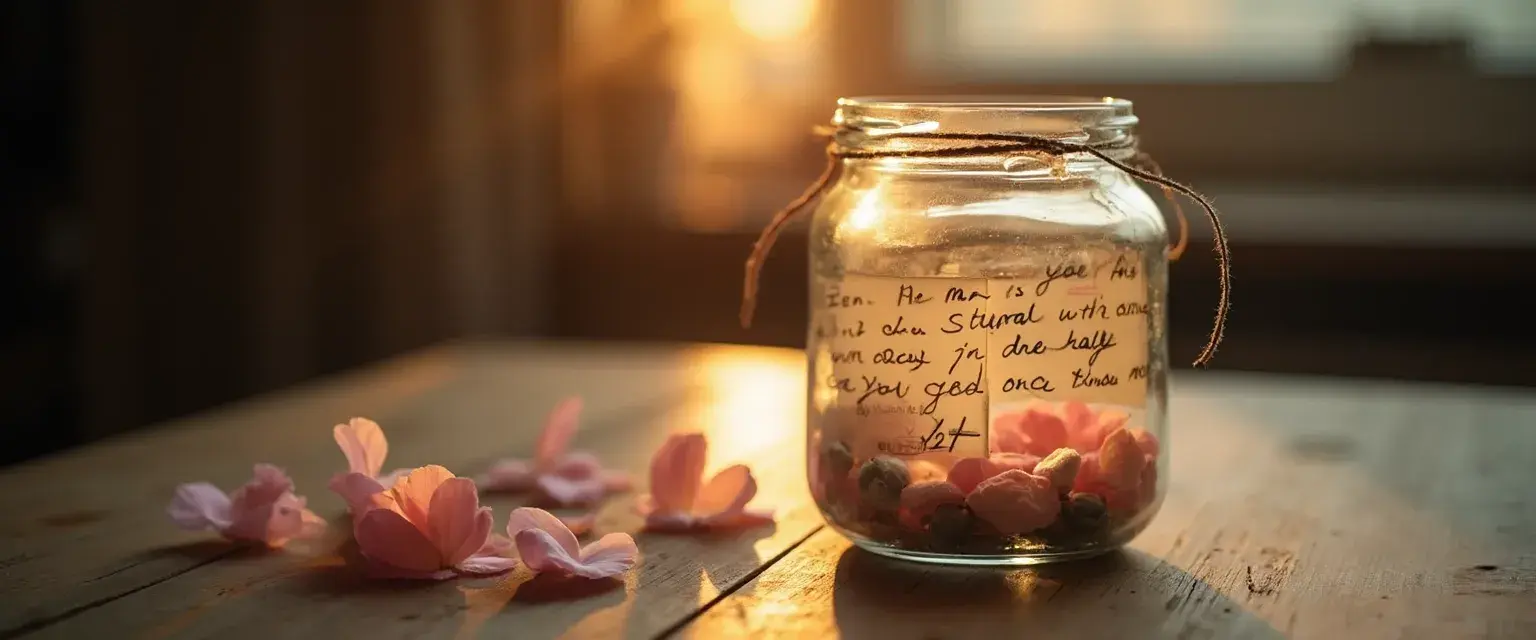
It was a simple glass jar.
Nothing fancy. A cork lid. A handwritten tag. Tiny folded notes tucked inside.
At first, I honestly thought it was decoration. Then someone told me, "Open one."
That single piece of paper changed the whole evening.
The gift that asked me to slow down
The note was short.
It reminded me of a camping trip years earlier when I accidentally burned breakfast because I was too busy trying to photograph the sunrise. Everyone laughed. I'd almost forgotten the story entirely.
The next note mentioned helping a friend move apartments.
Another recalled a family road trip where we got lost for hours but somehow discovered the best little café none of us had planned to visit.
One memory after another.
Not dramatic. Not life-changing.
Just...real.
By the time I reached the bottom of the jar, I wasn't thinking about birthdays anymore. I was thinking about people.
That's a rare gift.
What exactly is a memory jar?
A memory jar is wonderfully uncomplicated.
It's simply a container filled with written memories, messages, funny stories, favorite quotes, encouragement, or future wishes. Each slip of paper holds a tiny snapshot of life.
Some families add one note every week.
Friends fill jars before graduations.
Parents create them for children.
Couples exchange them on anniversaries.
There's no official format, which is probably why they've remained popular despite changing gift trends.
The beauty comes from personalization rather than perfection.
Why handwritten memories feel different
Digital messages disappear astonishingly fast.
A birthday text gets buried beneath dozens of notifications.
Photos stay hidden inside enormous camera rolls.
Social media posts eventually fade beneath endless scrolling.
Paper behaves differently.
You unfold it.
You hold it.
Sometimes you notice the handwriting before reading the words.
That physical interaction matters more than many people realize. Researchers studying autobiographical memory and emotional connection have consistently found that tangible personal objects often become powerful retrieval cues, helping people vividly recall experiences and emotions associated with them.
It's surprisingly difficult to ignore a handwritten memory once it's in your hands.
Mine wasn't perfect. That made it better.
Several notes had crossed-out words.
One friend spelled my name wrong.
Someone squeezed an entire story onto paper far too small, making the handwriting almost impossible to read.
Another note simply said:
"Thanks for always answering your phone."
That's it.
No elaborate speech.
No poetic language.
Honestly, it became one of my favorites.
Imperfections gave every message personality. They reminded me there was an actual person sitting somewhere, thinking carefully about what to write.
Computers erase mistakes.
People don't.
Ideas that made the jar surprisingly personal
Some memories were obvious.
Others caught me completely off guard.
If you're making one for someone else, mixing different types of notes creates a much richer experience.
Try including:
Funny inside jokes.
Tiny everyday moments nobody else would remember.
Things you've admired but never actually said aloud.
Favorite photographs printed small and folded inside.
Ticket stubs from concerts or movies.
Recipes connected to family traditions.
Quotes that remind you of the recipient.
Future hopes rather than only past memories.
Variety keeps each note unpredictable.
That's half the fun.
Choosing the jar isn't actually the important part
I spent way too much time later trying to recreate the gift for someone else.
I searched craft stores.
Compared glass jars.
Bought decorative ribbons.
None of it mattered nearly as much as I expected.
An old mason jar worked perfectly.
So did a recycled pasta sauce jar after removing the label.
Even a plain container can become meaningful if what's inside carries emotional weight.
People remember the words.
Not the glass.
Writing memories sounds easy until you actually start
Here's where most people get stuck.
Blank paper.
Blank mind.
Instead of trying to write profound life lessons, I learned to focus on specific moments.
Not:
"You're an amazing friend."
Instead:
"Remember staying up until 2 a.m. helping me fix my laptop before my interview? You never complained once."
Specificity wins every time.
The brain connects more naturally with concrete experiences than broad compliments.
One vivid story often says more than an entire paragraph of praise.
A few mistakes I made creating my own memory jar
The first jar I made wasn't nearly as successful.
I learned quickly.
I wrote messages that were far too long. Nobody wants to unfold a miniature novel.
I repeated similar compliments instead of mixing humor, gratitude, and memories.
After shortening each note, the jar became much more enjoyable to explore.
Little surprises work better than predictable ones.
The emotional part nobody warned me about
I expected happiness.
I didn't expect nostalgia.
Reading dozens of memories back-to-back creates an unusual experience. Events you hadn't thought about for years suddenly feel close again.
You begin noticing patterns.
People remembered moments I considered insignificant.
Apparently, helping someone study for an exam or driving across town to pick them up mattered far more than I realized.
That perspective shift stayed with me long after my birthday ended.
Sometimes we're terrible judges of our own impact.
Why memory jars keep showing up at celebrations
Gift trends change constantly.
Experience gifts become popular.
Subscription boxes appear everywhere.
Technology evolves almost monthly.
Yet memory jars continue appearing at birthdays, weddings, retirements, graduations, baby showers, and anniversaries.
There's a simple explanation.
Human relationships are built from accumulated experiences rather than expensive purchases.
Psychological research on gratitude, reflection, and positive reminiscence has repeatedly shown that recalling meaningful shared experiences can strengthen social bonds and increase feelings of connection.
The jar simply creates an easy way to preserve those moments before everyday life pushes them aside.
Small creative twists worth trying
You don't have to stop with folded notes.
Some thoughtful additions include:
Color-code memories by year.
Add QR codes linking to family videos.
Include tiny printed photographs.
Use different paper colors for different friends.
Hide one "Open on a difficult day" message.
Write future predictions to revisit years later.
None of these are necessary.
Still, they can make the experience even more interactive without making it complicated.
The tradition grew without anyone planning it
Something unexpected happened after my birthday.
The jar stayed on my bookshelf.
Visitors asked about it.
Eventually, family members began adding new notes during holidays.
Friends slipped messages inside after dinner parties.
The gift quietly transformed into an ongoing collection rather than a finished project.
Years later, it's fuller than when I first received it.
That's probably my favorite part.
The story never really ended.
FAQs
How many notes should a memory jar contain?
There's no perfect number. Twenty to fifty notes usually feels substantial without becoming overwhelming, but even ten thoughtful memories can create a meaningful gift.
Can children make memory jars?
Absolutely. Younger children often write simple memories or draw pictures instead of long messages. Those can become treasured keepsakes over time.
Do memory jars have to be for birthdays?
Not at all. They're equally meaningful for graduations, anniversaries, retirements, Mother's Day, Father's Day, weddings, or simply to encourage someone going through a difficult season.
Should every note be emotional?
Definitely not. Humor belongs in the jar too. Funny stories, harmless embarrassing moments, and inside jokes help balance sentimental messages.
What if I can't think of enough memories?
Start by looking through old photos, calendars, text messages, or travel pictures. Small everyday moments often spark the strongest memories once you begin remembering one event after another.
Start collecting moments before they disappear
If there's someone in your life who seems impossible to shop for, skip the pressure of finding the "perfect" present.
Grab a clean jar.
Find some paper.
Write one real memory.
Then another.
You may discover what I did—that the gifts people return to year after year aren't always the ones that cost the most. They're the ones that quietly remind us who we've shared life with, one folded note at a time.
memory jar gift DIY
handmade birthday memory jar
sentimental homemade present
personalized keepsake gift
DIY friendship gift ideas
Found this helpful? Share it!